

Reimbursed Medical Devices
A prescription voucher for a reimbursed medical device may only be issued by a treating physician or by a healthcare professional with specialised or special professional qualifications (e.g. a nurse, laboratory technician, therapist, etc.). As of 1 January 2026, the use of an electronic format (eVoucher) has become mandatory for this purpose, subject only to specific exceptions.
On the other hand, the dispensing of medical devices prescribed on a voucher, with subsequent reimbursement claimed from public health insurance, may only be carried out by authorised dispensers. These include pharmacies, medical device dispensing outlets, optical stores, or contracted dispensing providers.
Provision of Medical Devices in a Physician’s Office
As noted above, a person authorised to issue a prescription voucher is not authorised to dispense the prescribed medical device to the patient and subsequently claim reimbursement from public health insurance on the basis of that voucher.
However, certain groups of orthopaedic and prosthetic medical devices (such as orthoses, cervical collars or crutches) are reimbursed when prescribed on a voucher, while their intended purpose also allows their use in the treatment of acute conditions. In such cases, and from the perspective of appropriateness and patient safety, it is permissible for the required medical device to be provided directly to the patient during treatment in the physician’s office.
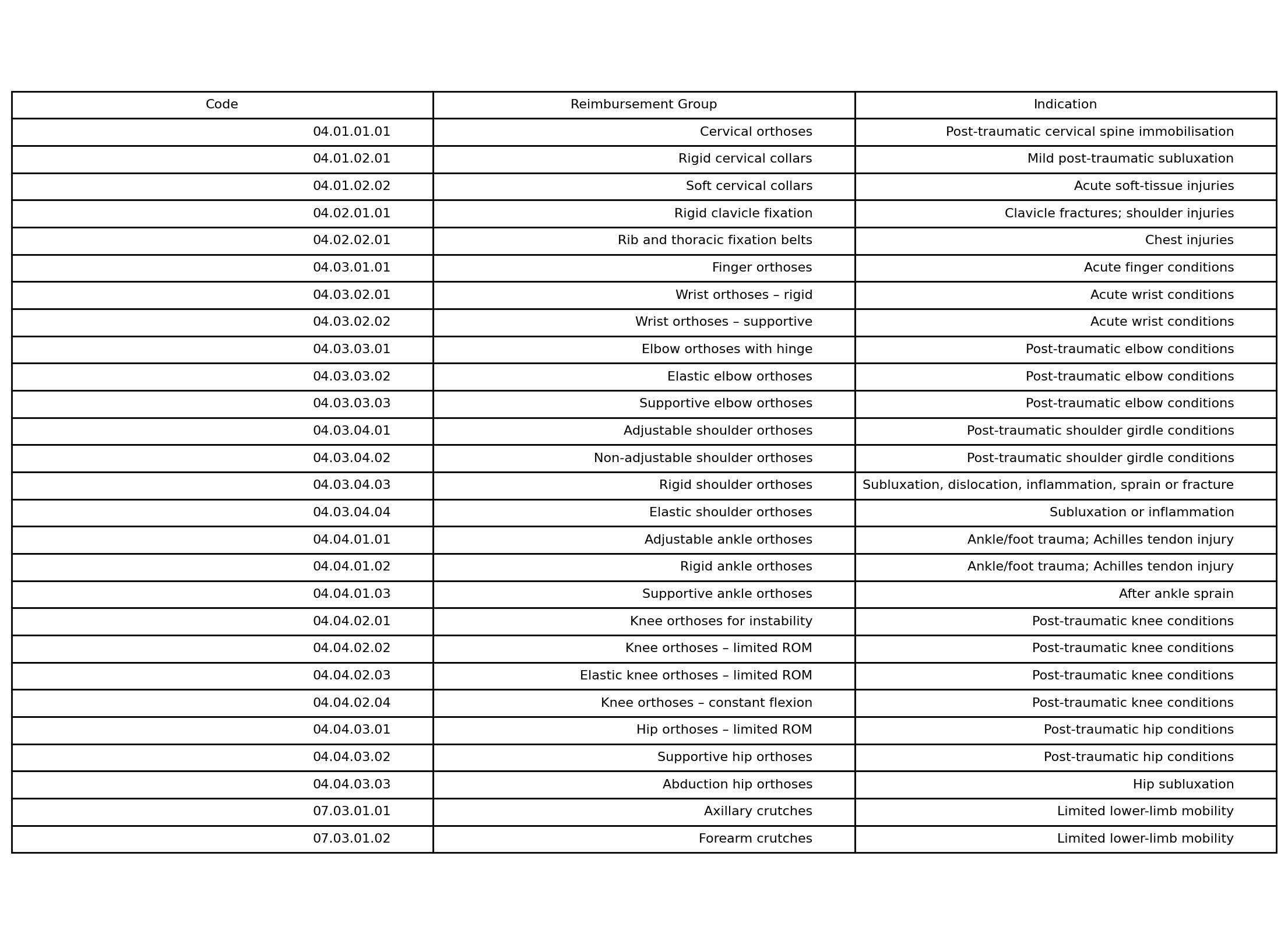
For such cases, however, the following conditions apply:
At the same time, even in acute care situations, the patient
retains the right to freely choose the dispenser. The physician must
therefore inform the patient of the available options. If the patient agrees to
receive the medical device directly during treatment in the physician’s office,
the physician records this fact on the eVoucher.
The physician may then apply the orthopaedic or prosthetic
medical device during treatment, provided that the device has been supplied to
the practice by a pharmacy or dispensing outlet belonging to the same
healthcare provider.
The treating physician must also issue an eVoucher for the supplied medical device and select the blocking option for the pharmacy/dispensing outlet. The block is applied directly to a specific dispensing site by entering its facility code. The eVoucher must also include the indicator “Patient consent to provision during treatment”.
The prescriber may additionally send notification of the issued eVoucher directly to the selected pharmacy or dispensing outlet.
Medical Devices Used During a Procedure
A healthcare provider that is not simultaneously a contracted dispenser or a registered distributor should keep on its premises only those medical devices intended for use in the provision of healthcare services.
Medical devices that are used directly by the physician during a procedure and are intended to be paid for directly by the patient in the physician’s office (i.e. devices without reimbursement from public health insurance or devices that do not meet certain prescribing restrictions) are provided as follows:
Medical devices obtained in this way may be stored in the physician’s office (provided that the storage conditions specified by the manufacturer are met) and subsequently used for the relevant patient.
Under the law, healthcare providers are also required to: “prepare a price list of healthcare services and services related to healthcare provision that are not reimbursed or are only partially reimbursed from public health insurance and make it available to patients; this obligation does not apply to providers of pharmacy services.”
Mail-Order Dispensing of Medical Devices
In the case of mail-order dispensing, the legislation does not restrict delivery of a medical device to a particular address. Consequently, delivery may also be made to a physician’s office if the patient chooses this option.
After the treating physician has issued an eVoucher in the standard manner, the patient enters the assigned eVoucher identifier on a platform offering mail-order dispensing services and selects the preferred delivery address.
This article is based on information published on the
SÚKL website.
The English translation was prepared with the assistance of ChatGPT.